⚠️ Trigger Warning: I’ll be talking about abuse and sharing my personal experience with psychological, and verbal abuse.
Some things are hard to write. Some things are even harder to live through. This is both.
This is not an attack. It’s not revenge. It’s not exaggeration. It’s MY truth—raw, unfiltered, and long overdue.
For years, I accepted treatment I never should have. I dismissed the threats, ignored the warning signs, and convinced myself that blood meant loyalty, that love excused harm. But love doesn’t look like threats. It doesn’t sound like insults. It doesn’t feel like fear.
I’m writing this not just to process my own pain, but to break a cycle—one that’s been allowed to exist in our family for far too long. A cycle where abuse is minimized, where excuses replace accountability, and where humor is used to deflect from deep dysfunction.
I know the first person to read this will be my brother (hopefully). So let me be clear: this is not just my story. It’s our story. One you may not recognize yet—but one I can no longer ignore.
A Truth Unveiled
The first weekend of 2025 brought not just drama but trauma to the surface. I was threatened by my own blood—a reminder of the deep spiritual baggage I’ve incarnated with. (You know, the unseen stuff that weighs us down and hinders our growth and peace.)
I recognize that through pain, I learn, transform, and share my experiences in the hope of helping others.
My brother James and I are seven years apart. Growing up, in our household, he and my mother were the only ones allowed to express anger without consequences. His abuse toward me has been ongoing—primarily verbal and psychological. Looking back, I now realize how much I’ve endured.
This isn’t about listing grievances; it’s about recognizing patterns I’ve been conditioned to accept—and choosing not to anymore.
A History of Harm
The threats and abuse go back to my teen years. In junior high, he offered to pay a girl to beat me up. That didn’t happen—I won the fight—but it took her sister jumping in for me to realize how much danger I had been in. At the time, I brushed it off. Now, I see it differently. He instigated violence instead of protecting me.
He has always shown contempt for women, but I never realized it until someone else pointed it out. Years ago, when I used the word “bitch” to empower myself, he took it upon himself to remove my bumper sticker without my consent. It read, “You say I’m a bitch like it’s a bad thing.” That small act symbolized something much bigger—a refusal to let me define myself on my own terms.
When we owned a home together, he made sure I knew that paying bills late was unacceptable. At 23, I had a lot— a home, a fast car, and a career. I can honestly say he helped me achieve many material things, and now all my obligations are always paid with time to spare. 🙂
His abuse extended toward my ex-husband in passive ways, using me as the mediator between them. I didn’t feel safe with either of them. Once, in a rage over my ex locking the bathroom door, he broke the door frame. Another time, he swung at me and ended up slicing his hand open when he hit and broke a lamp casing outside our front door. He’ll claim he wasn’t aiming for me, but I was standing right there. That was the first time I texted my other siblings, warning them that if anything happened to me, it was him. That afternoon, I locked myself in my room until I needed to leave.
The song “Last Resort” by Papa Roach reminds me of his energy – rage barely contained, waiting to explode.
The way he speaks about women, the violence in his tone—it’s always been there. But it hit me differently after the incident.
I could go into more patterns and examples, but I think you get the point.
The Threat I Couldn’t Ignore
While I was enjoying myself at a family wedding, minding my business, he made it clear how he felt about me. He claimed to love me, yet pulled up his shirt, tapped his concealed weapon, and said, “You’re lucky you’re my sister.”
I stood there in shock, questioning whether he had really just threatened me. Yes, he did. But what was worse? The way my family laughed it off:
- “He’s your brother.”
- “He was raised around violence.”
- “He’s drunk.”
Every excuse was a reminder that my safety would always come second to their comfort.
Later that same night, after I expressed that he should never threaten me with a gun again, he threatened to hit me with a chair. I left immediately after that threat.
Then came the text messages—claims of love, followed by more threats. “It all comes back,” he wrote. I laughed, sent him a thumbs-up , and blocked him.
I laughed, not because it was funny, but because I saw it for what it was—an invitation to finally step out of the cycle.
Recognizing the Cycle
Safety has been a lifelong struggle for me. My father never provided it, and my mother’s overprotection only perpetuated a cycle of abuse in my relationships—friendships, professional dynamics, and romantic affairs.
I’ve always been drawn to men who looked like they could protect me—tall, stocky, heavyset, the “bad boy” type. And yet, the cycle repeated. The protection was an illusion, and abuse followed. When something feels normal, it’s hard to see it as wrong. (My ex wasn’t any of those things, but that’s a blog for another day)
The teasing, the name-calling, the constant comments about my appearance—it was all framed as “building character.” But looking back, it only battered my self-esteem.
The Family’s Coping Mechanism
Humor has always been our family’s shield against pain. We joke, we laugh, we minimize—but at what cost?
For years, I laughed off the things that hurt me most. It was easier than acknowledging how deep the wounds ran.
True healing requires vulnerability—acknowledging and processing the pain beneath the laughter. While humor has its place, it should not replace the essential steps of reflection, emotional expression, and seeking support. Recognizing when laughter is a shield rather than a tool for growth is key.
The Choice is Yours
I am only a victim of the circumstances I choose not to change. I refuse to be a victim. I know my presence makes people uncomfortable. I work with the subconscious, understand dark psychology, and study magic. People question my ethics, my belief in a higher power, and whether I “work with the light.”
I know that I am difficult to read, difficult to befriend. But that doesn’t take away from my genuine interest and my deep desire to help others with my gifts and education. It simply means I’ve learned to protect myself. And now, I am done doing the heavy lifting in relationships that do not serve me.
Blocking my brother isn’t punishment—it’s protection. And I won’t apologize for protecting myself.
Healing is a privilege, and accountability is a choice.
Why Walking Away is Crucial
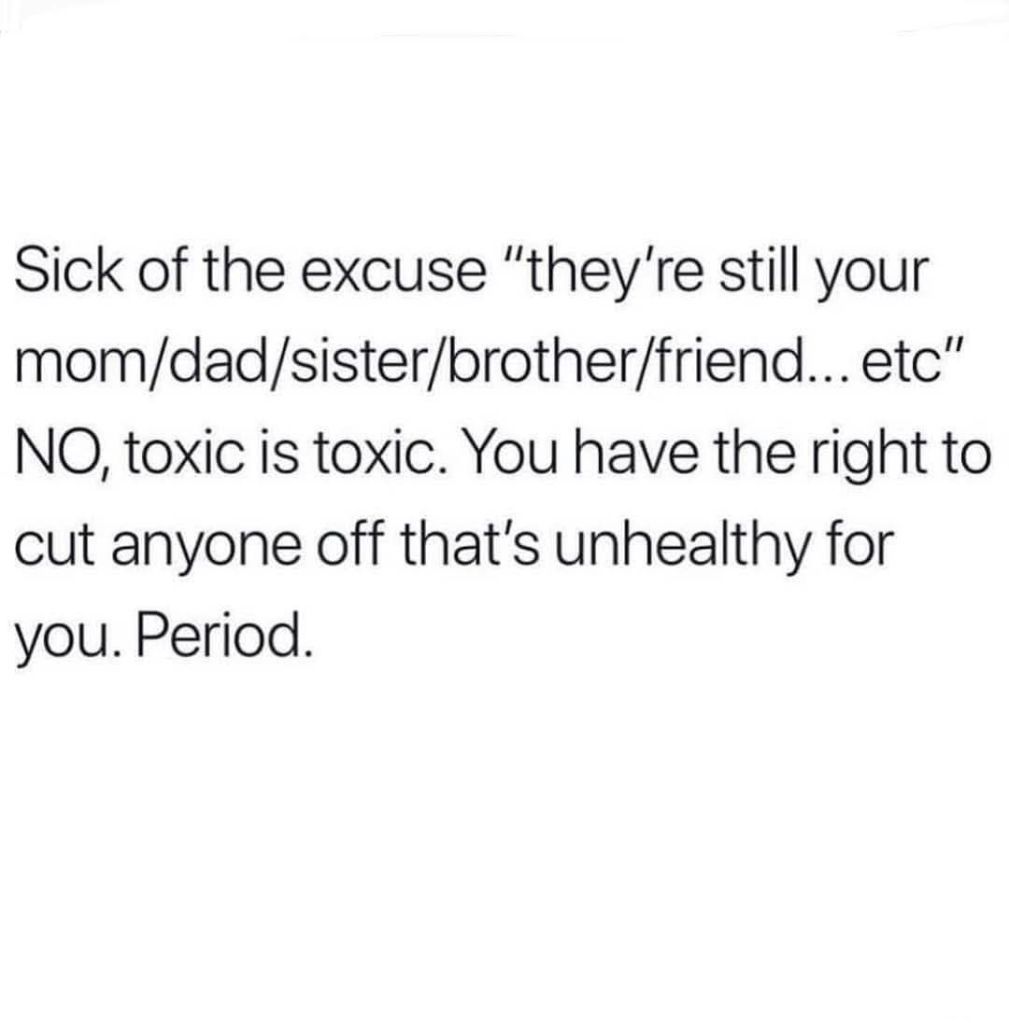
Knowing when to remove yourself is a matter of survival, not sentiment. Titles mean nothing when harm is involved. Brother, sister, parent, friend—none of it matters if the relationship is abusive. We are conditioned to believe that family must be tolerated, that loyalty is unconditional. But true loyalty is reciprocal. True love does not threaten, manipulate, or control.
The hardest but most powerful decision you can make is to choose yourself. The moment you do, you break the cycle—not just for yourself, but for every generation that follows.
Final Thoughts
If I remove this person from my life, what would I gain? Peace? Safety? Self-respect?
If I keep them, what do I risk losing? My energy? My confidence? My sense of self?
When love is used as a weapon, it is no longer love—it’s control. Choosing yourself isn’t selfish; it’s survival. Choosing myself doesn’t mean I don’t love my family—it means I finally love myself more.
I hope this helps.
-Aryana
Here’s a process to assist.
Self-Reflection Questions: Knowing When to Walk Away
1. Patterns of Behavior
Has this person repeatedly harmed me emotionally, verbally, or physically, even after I’ve addressed it?
Do they take accountability for their actions, or do they make excuses, blame others, or gaslight me?
2. Impact on Well-Being
How do I feel before, during, and after interacting with this person? Drained? Anxious? Unsafe?
Do I find myself making excuses for their behavior or downplaying their impact on me?
3. Respect & Boundaries
Do they respect my boundaries, or do they push, mock, or ignore them?
Have I expressed my needs, and do they make an effort to honor them?
4. Reciprocity & Support
Does this relationship feel balanced, or am I always the one giving, forgiving, or fixing?
When I need support, do they show up for me the way I show up for them?
5. Growth & Transformation
Have I been trying to “fix” them while neglecting my own healing?
If nothing changed, would I be okay with this relationship a year from now? Five years?
6. Spiritual & Emotional Alignment
Does this relationship align with the person I am becoming, or does it keep me stuck in old patterns?
Am I staying out of guilt, obligation, or fear of what others will say?
7. Breaking the Cycle
Have I seen similar patterns in other relationships, and is this a cycle I need to break?
If a loved one came to me with this same situation, what would I tell them to do?
A Prayer 🙏
God, allow me to see things clearly with my brother whom I’ve offended.
Grant me the wisdom to release what no longer serves my peace.
Bless me in choosing to block those who bring harm, for my safety is sacred.
May my heart remain open to healing, but my boundaries firm in self-respect.
I trust that in walking away, I align with Your divine protection and grace.
Invitation for Prayer
If you’re reading this and feel like sending a little prayer my way, I wouldn’t say no! Let’s ask for some healing, clarity, and maybe a bit of family peace—because Lord knows, we could use it. 🙏 (And if you can’t pray, at least send good vibes… or memes. I’ll take both.)
 SHIFTING REALITIES IS WHAT I DO. CHOOSING THE POWER TO SHIFT, IS WHAT YOU DO.